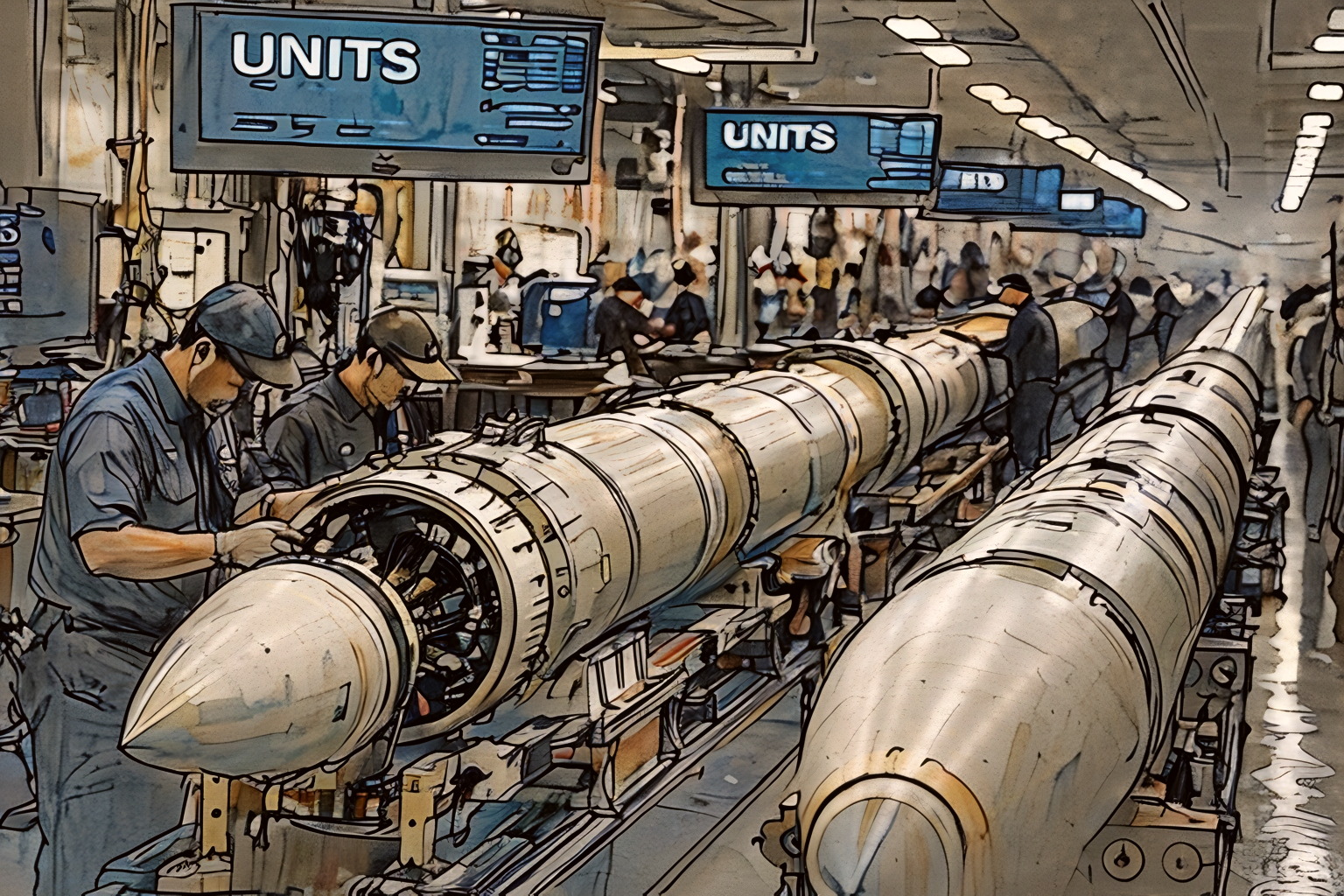
On the production floor in Camden, Arkansas, the missiles are not called Patriots.
They are called units.
The word appears on the screens above each workstation. A unit enters the line as a long metal cylinder holding the basic structure of an interceptor. By the time it leaves the station it carries guidance electronics capable of tracking an incoming missile traveling several times the speed of sound.
Around the room, the work proceeds in measured stages. A rocket motor fitted here. A sensor package sealed there. Each step logged and inspected before the unit moves to the next station.
The rhythm resembles aircraft manufacturing more than anything most people associate with war.
Outside the building, however, those units eventually become the flashes of fire seen in news footage—the moment when an interceptor launches and destroys a target somewhere high in the sky.
That launch is the visible moment.
The arithmetic begins afterward.
Every interceptor fired removes one unit from inventory. The stockpile shrinks immediately. Replacement begins only when another missile reaches the end of a production line like the one in Camden.
The two clocks rarely move at the same speed.