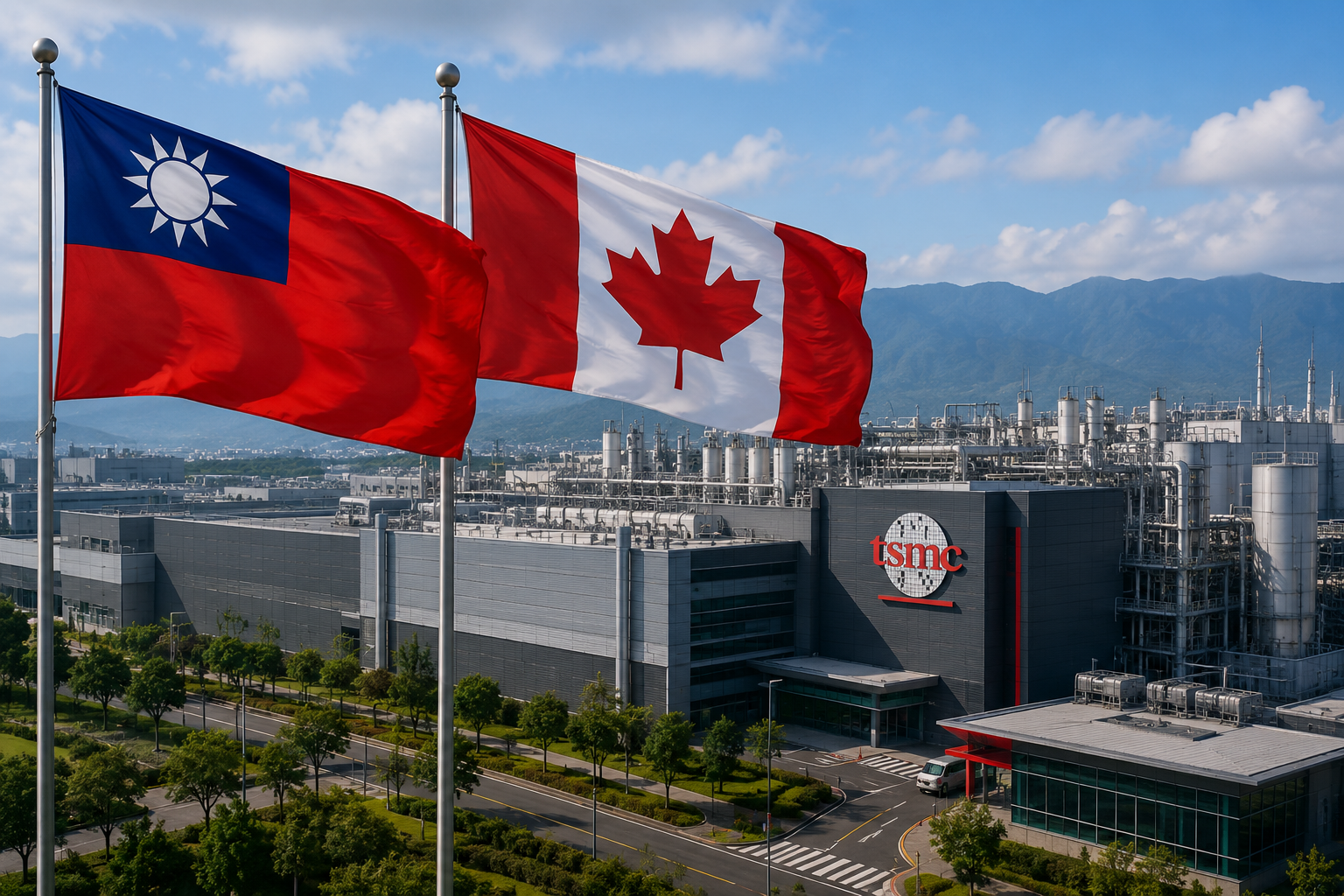
More than 90 percent of the world’s most advanced chips are made in Taiwan.¹
That sentence should stop any government that reads it. It should stop the U.S. It should stop Canada.
The chips that run phones, hospitals, vehicles, data centers, communications networks, artificial intelligence systems, and advanced weapons depend on manufacturing capacity concentrated on an island China claims as its own. Taiwan sits about 100 miles from the Chinese mainland. The world has built its digital nervous system around a place Beijing says is not a foreign country.
This is what modern vulnerability often looks like: quiet, efficient, profitable, and invisible until it breaks.
Morris Chang helped build this world. In 1987, after decades in the American semiconductor industry, he returned to Taiwan with an idea that sounded almost dull: let some companies design chips and let another company make them. TSMC became the world’s first dedicated semiconductor foundry. Apple could design. Nvidia could design. AMD and Qualcomm could design. TSMC would make.²
The model helped create the modern digital economy. It also concentrated the hardest part of that economy in one of the most dangerous places on earth.
Taiwan was not the only country that proved specialization could create power. Philips, the Dutch electronics company, became an early TSMC partner when others hesitated. In the Netherlands, Philips and ASM International also helped create ASML, which now holds one of the most powerful positions in the semiconductor world. Its extreme ultraviolet lithography machines are essential to making the most advanced chips.³