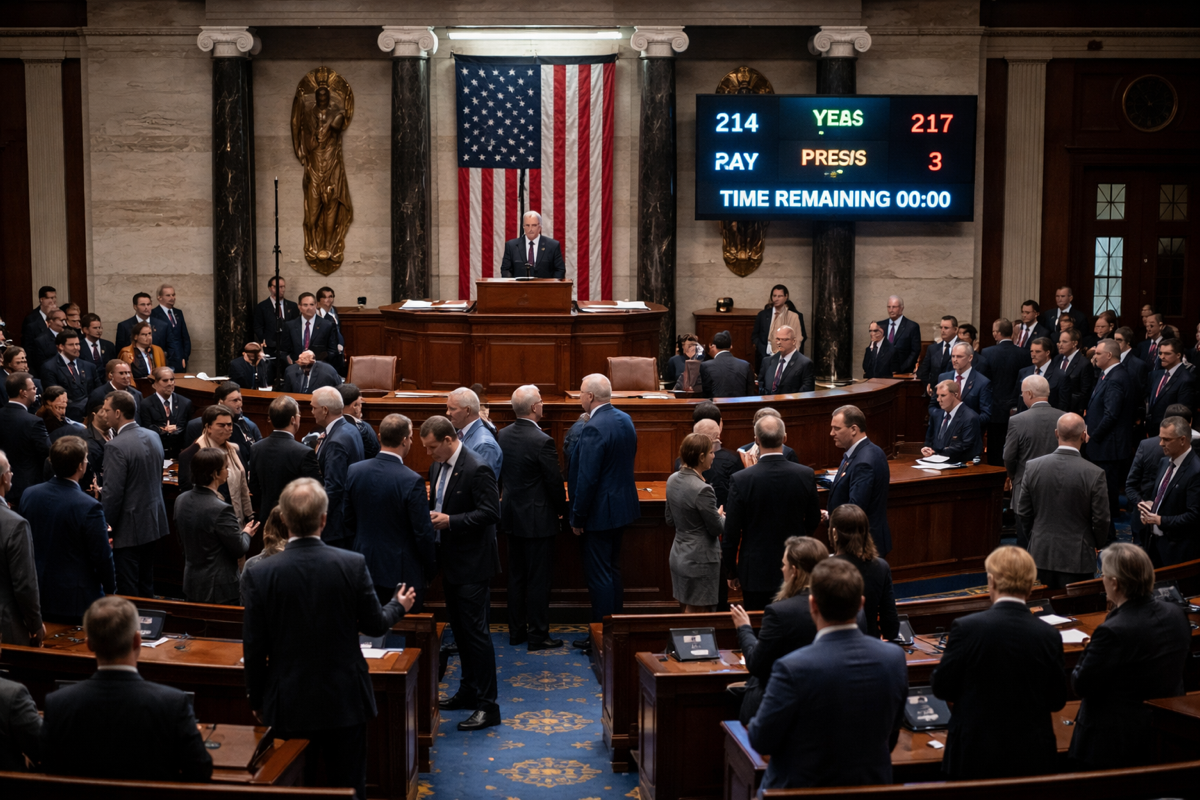
The vote was supposed to last fifteen minutes.
The electronic chime that calls members to the House floor had already sounded twice. The green LEDs on the vote board cast a dull glow across faces that were supposed to look bored. Rules votes rarely carry drama. They’re procedural—confirming how debate will happen, not what debate will decide. Members drift in from hallway conversations. Staffers count heads. The scoreboard usually resolves itself along party lines with commuter-train reliability.
But on the night Speaker Mike Johnson tried to block votes challenging Donald Trump’s tariffs, the clock kept running.
And running.
Staffers clustered in the aisles. Leadership aides hovered near holdouts. The vote board glowed half-finished as Republicans who normally vote in formation drifted toward “no.” The vote stayed open nearly ninety minutes while leadership tried to flip the numbers back.
It didn’t work. The rule failed, 217–214.
Procedural votes are supposed to hide conflict. This one showed where it already lived.
The rule Johnson tried to pass wasn’t technically about tariffs. It was about whether Congress could vote on them at all.
At the White House’s request, House leadership inserted language into a routine procedural vote that would block lawmakers from forcing votes to overturn Trump’s emergency tariff declarations until midsummer.¹ The goal was straightforward: