The Emergency That Learned to Stay
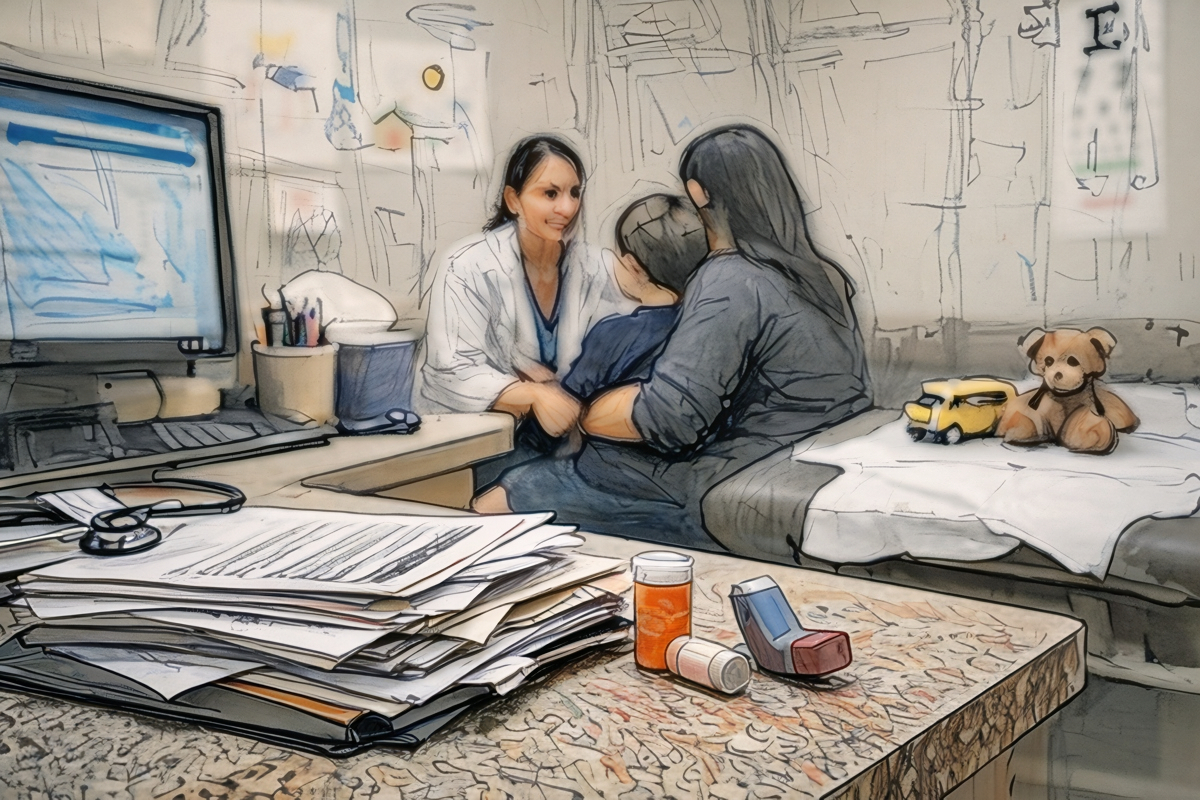
The exam room smells like hand sanitizer and powdered gloves — that sharp, clean scent that promises order. It’s the smell of systems that are supposed to work.
Dr. Dolly Lucio Sevier smells it every day.
This morning she’s trying to calm a five-year-old boy who can’t explain why he keeps coughing. His mother hands her a plastic envelope stuffed with discharge papers from three different detention facilities. The medication lists don’t match. The dates don’t line up.
The system has already processed the child.
What it has not done is keep him medically intact.
That is the mechanism.
Emergency immigration authority is built to move people quickly across facilities and jurisdictions. Pediatric care is built to follow a patient over time. When those two systems intersect, speed breaks continuity, and continuity is what keeps children stable.
The boy laughs anyway, pressing a toy truck into the paper lining of the exam table, drawing roads that connect nothing. His breathing rattles when he does.