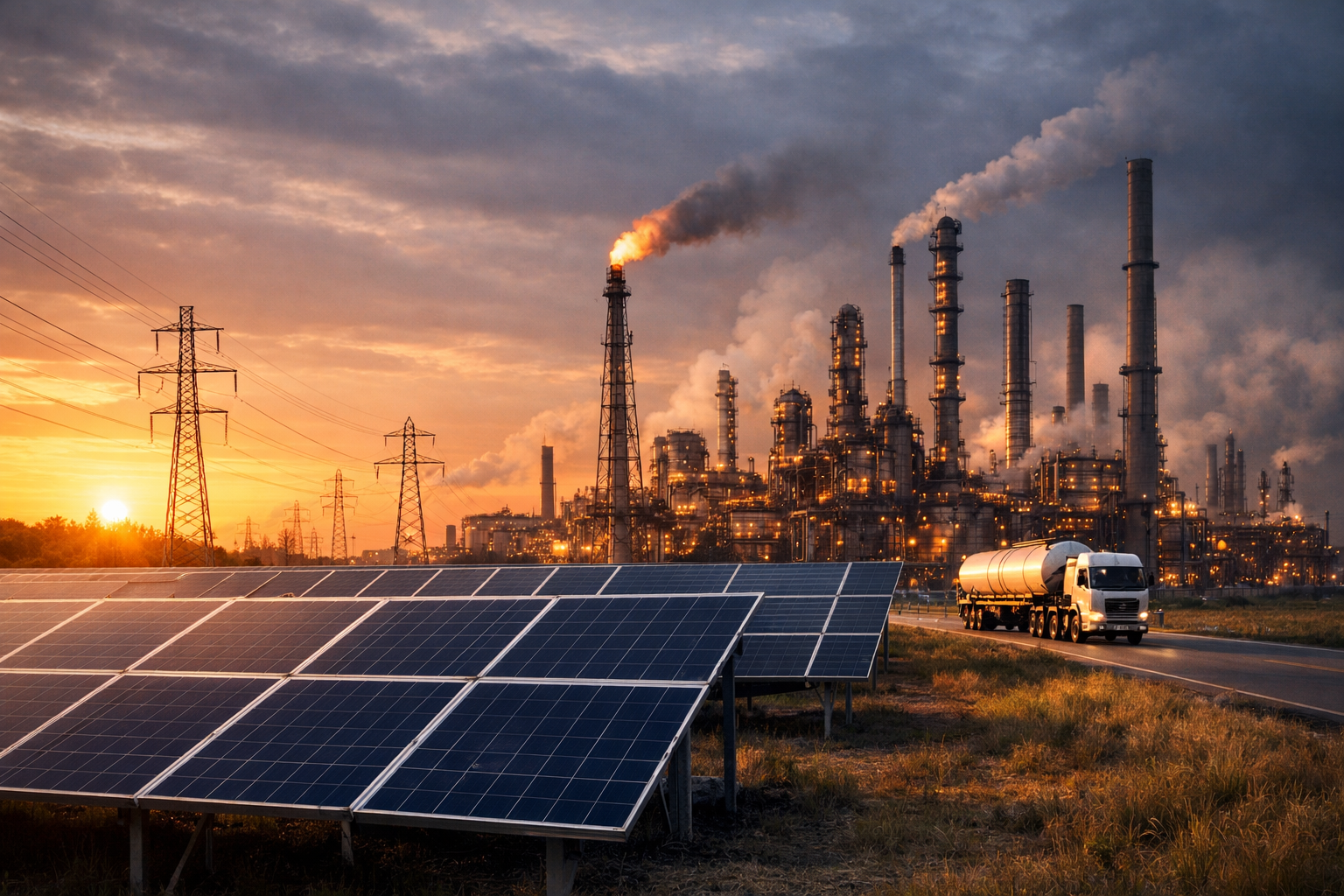
The damage to our economy from energy shortages doesn’t end when the war does.
The man on the loading dock in Scranton keeps the engine running, even though every second burns money he can’t get back.
He isn’t waiting on the pallet anymore. He’s watching the number on his phone—diesel climbing again, a few cents at a time—running the route in his head before the job is finished, because the margin he thought he had has already narrowed. A month ago, he wouldn’t have checked, because the route paid what it paid and the margin was stable enough to ignore small shifts. Now the number is part of the job.
A few hours west, in a low industrial building outside Pittsburgh, a plastics manufacturer made that adjustment before the driver realized he had to. After two seasons of energy costs moving through his margins, the owner locked in a fixed-rate electricity contract, paying more upfront to remove a variable that had started to dominate his cost structure.
“We’re not trying to win on energy anymore,” he said. “We’re trying not to lose on it.”
Those two decisions now sit on the same timeline, and over the past week that timeline has stretched.
Continued Israeli strikes into southern Lebanon and the ongoing disruption of the Strait of Hormuz—the narrow corridor that carries roughly a fifth of the world’s oil—have kept risk embedded in fuel prices. Brent crude has held in the $90 to $100 range, a level that begins to shape behavior when it persists.
The economy responds less to the level than to the duration, because a price spike is an event while what follows is a set of decisions that outlast it.