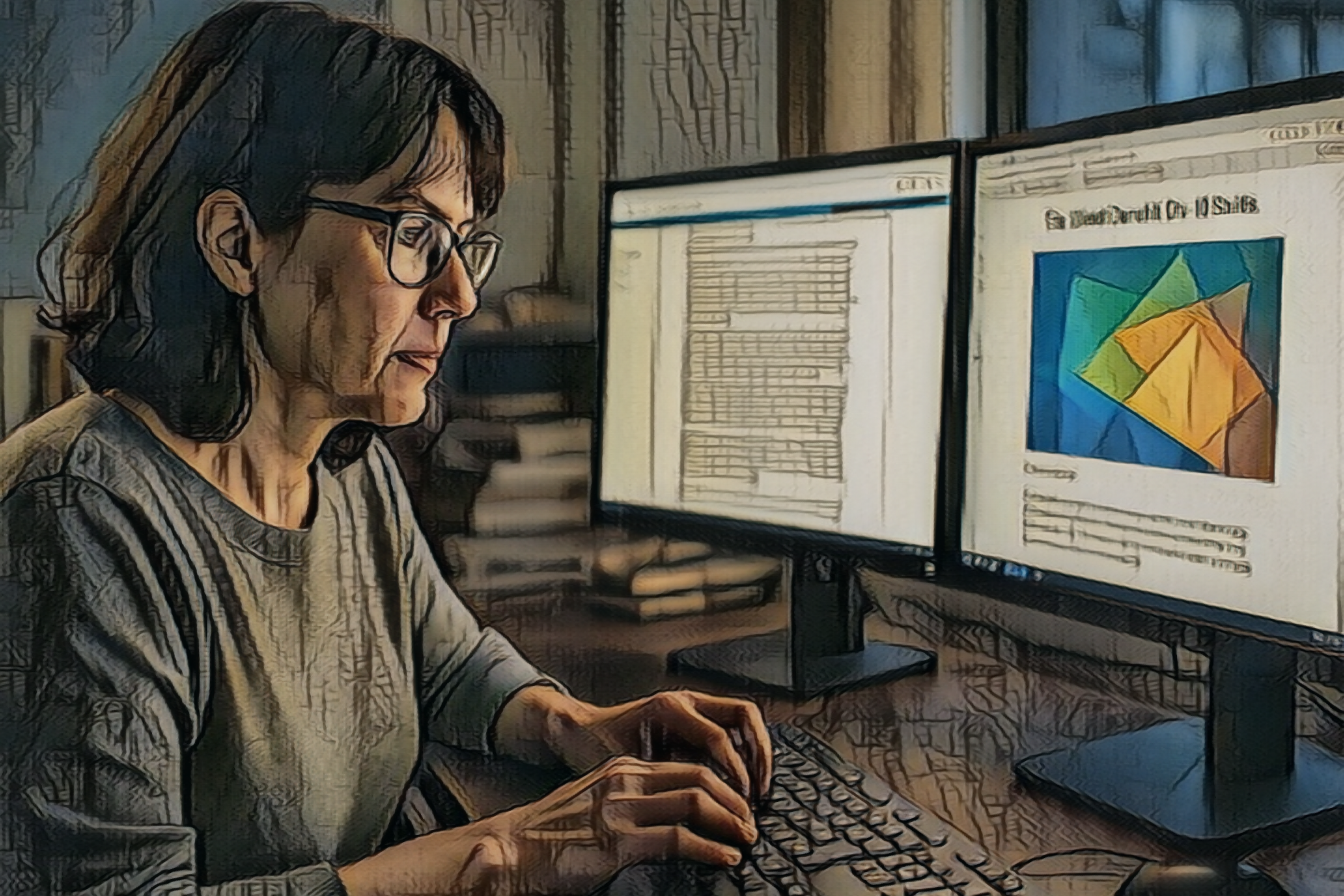
The clatter of keyboard keys wasn’t quite rhythmic, but it was persistent — like a dog pacing across hardwood, trying to settle. Behind the glow of her dual monitors, Abby squinted at two nearly identical headlines her AI assistant had drafted: one punchier, one more accurate. She sighed. Pick one, fix the deck, trim the lead, rework the art prompt, check the alt text. Same story, different job.
“It doesn’t save me time,” she said, dragging the sharper headline into the CMS, “it changes where I spend it.”
Abby used to be a copy editor. Now she’s a curator of machine-drafted mush, slicing through hallucinated quotes, nudging rhythm back into shape. And she’s fast. But not because the AI replaced her — because it forced her to rewire the process. That’s what no one on cable or Medium seems to get: AI isn’t eliminating jobs; it’s mutating them.
The scary stories always hit first. In 1494, Abbot Trithemius warned that printed books would decay while monk-made parchment lasted millennia¹. In 1899, E.P. Ingersoll said the car could never compete with trains². In 1995, Clifford Stoll mocked the idea of online shopping and predicted the internet would collapse³. They were all wrong — and in being wrong, they were also partly right.
The technology didn’t destroy the world. It didn’t save it either. It reshaped it. And it reshaped work.
“We didn’t lose jobs — we lost the old idea of what those jobs were,” said Carlos, a teacher in Bogotá who uses AI to design quizzes in half the time, then spends the other half reworking lesson plans for students struggling with written Spanish. “I don’t grade essays anymore. I debug their logic.”