A nurse in Kentucky has been doing what nurses do. She takes care of disabled people. She also has four children, ages 13, 12, 8, and 2.
After the Supreme Court cleared the way for the Trump administration to end Temporary Protected Status for Haitians and Syrians, she prepared a will. She named a legal guardian for her children and transferred property into their names. She told the Associated Press that it felt “like preparing for a funeral.”¹
That is what an immigration ruling looks like when it reaches the kitchen table.
Temporary Protected Status sounds like paperwork. It sounds like one more immigration category in a system already dense with initials, forms, expiration dates, court orders, and re-registration requirements. In real life, TPS is the document that lets a nursing assistant show up for work, a roofer stay on a crew, a mother pay rent, a father drive to the warehouse, a home health aide keep seeing the same patient every morning.
It is temporary in law. It has not been temporary in people’s lives.
The administration’s argument is straightforward: the word “temporary” has to mean something. TPS was not designed to become a permanent immigration status, and presidents have broad discretion over whether country conditions still justify protection. That is the strongest version of the case for ending it.
But there is a difference between enforcing immigration law and pretending the law operates in a vacuum. Over many years, TPS holders have become workers, taxpayers, parents, caregivers, tenants, business owners, church members, and neighbors. The government can remove a legal status much faster than the economy can replace the labor and care that comes with it.
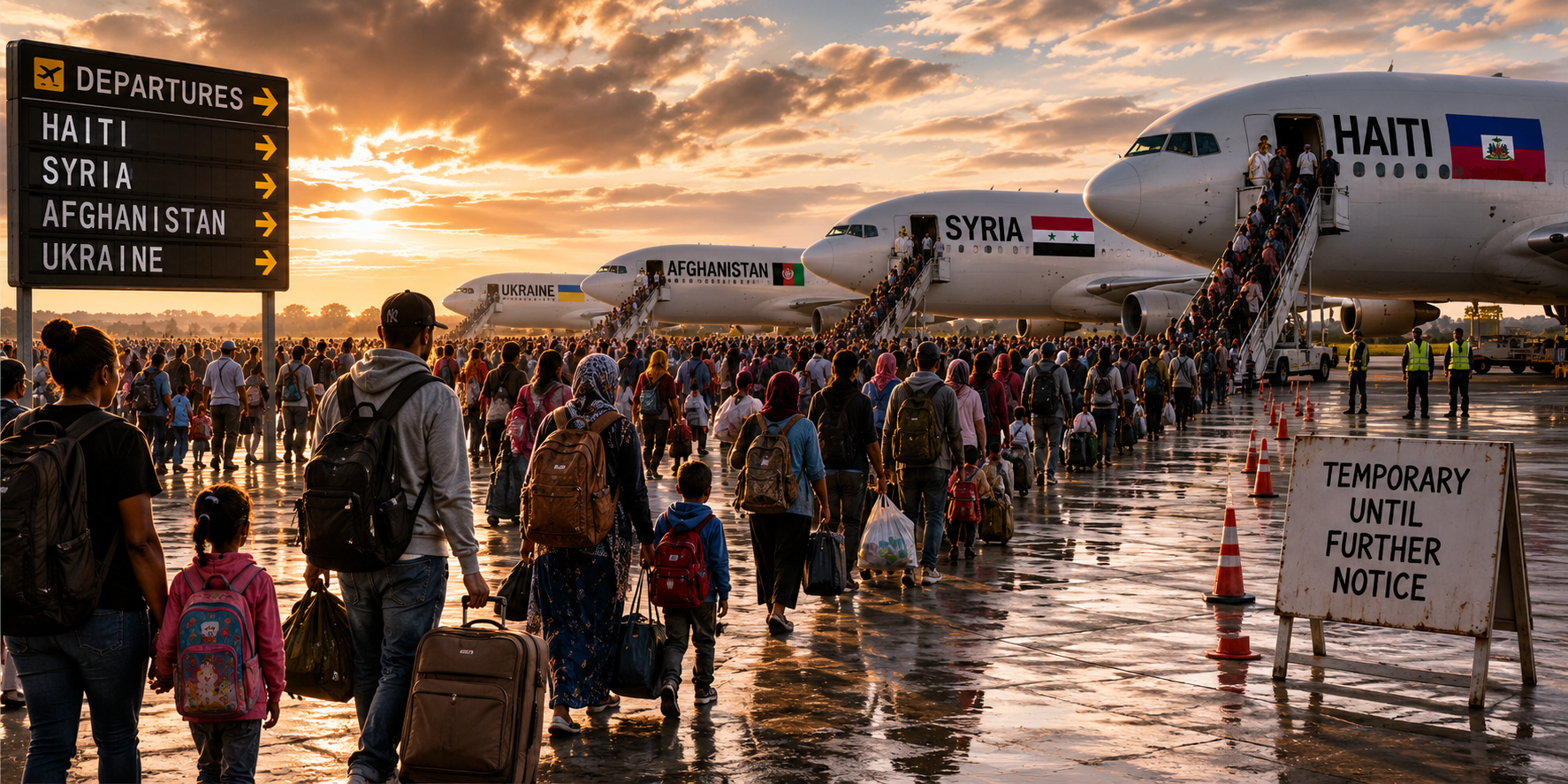
The Court did not order anyone deported. In Mullin v. Doe and Trump v. Miot, it cleared the way for the administration to move ahead with ending TPS for Haitians and Syrians while litigation continues. About 350,000 Haitians and 6,100 Syrians were immediately at risk. If the administration succeeds in ending TPS more broadly, more than a million people could ultimately be affected.²