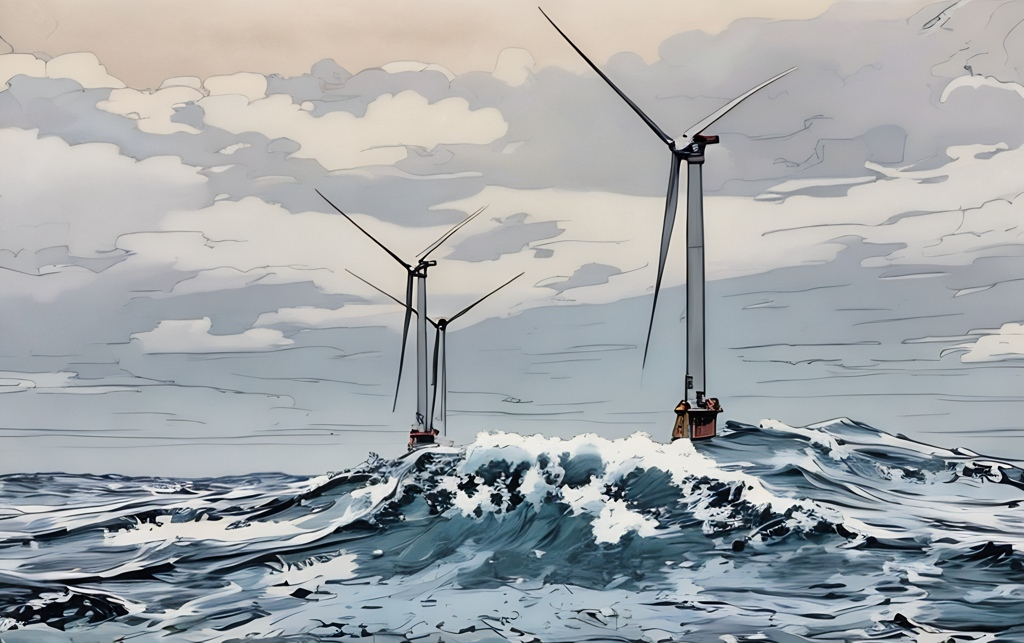
When One Man’s Grudge Becomes National Energy Policy
His boots hit the gangway with a sound like hollow drums. Around him, the towers rose unfinished—beige‑gray spires that looked like the ribcage of some shipwrecked cathedral. The wind came in low and dry, threading beneath his jacket collar. It should have meant work. Now it just hissed.
Tom didn’t follow politics the way some guys on the pier did. He followed work. For fifteen years he’d worked high steel—rigging, hoisting, bolting rings on these towers bound for offshore wind farms. He could point to them, name the men who’d fit each blade hub by hand. He didn’t need a briefing to know what had been abandoned.
Behind him, the gates had padlocks. Concrete mixers sat idle under plastic sheeting, and the crew boards were wiped clean. What was supposed to be a decade‑long boom—the transformation of America’s offshore wind economy—had stalled in real time. Not from supply chains or storms. From one man’s vendetta.
That man now sat in the Oval Office again.
The stop‑work order hit like a shutter slamming in heavy wind. Tom first heard it on the radio, then saw the foreman’s truck idle long in the lot. At the union hall later that week, the usual noise had flattened.
“Let’s call the stop‑work order what it is,” said Sean McGarvey of the Building Trades. “President Donald Trump just fired 1,000 of our members.”¹
The camera lights flickered on. The wind off Narragansett Bay pushed against their jackets.