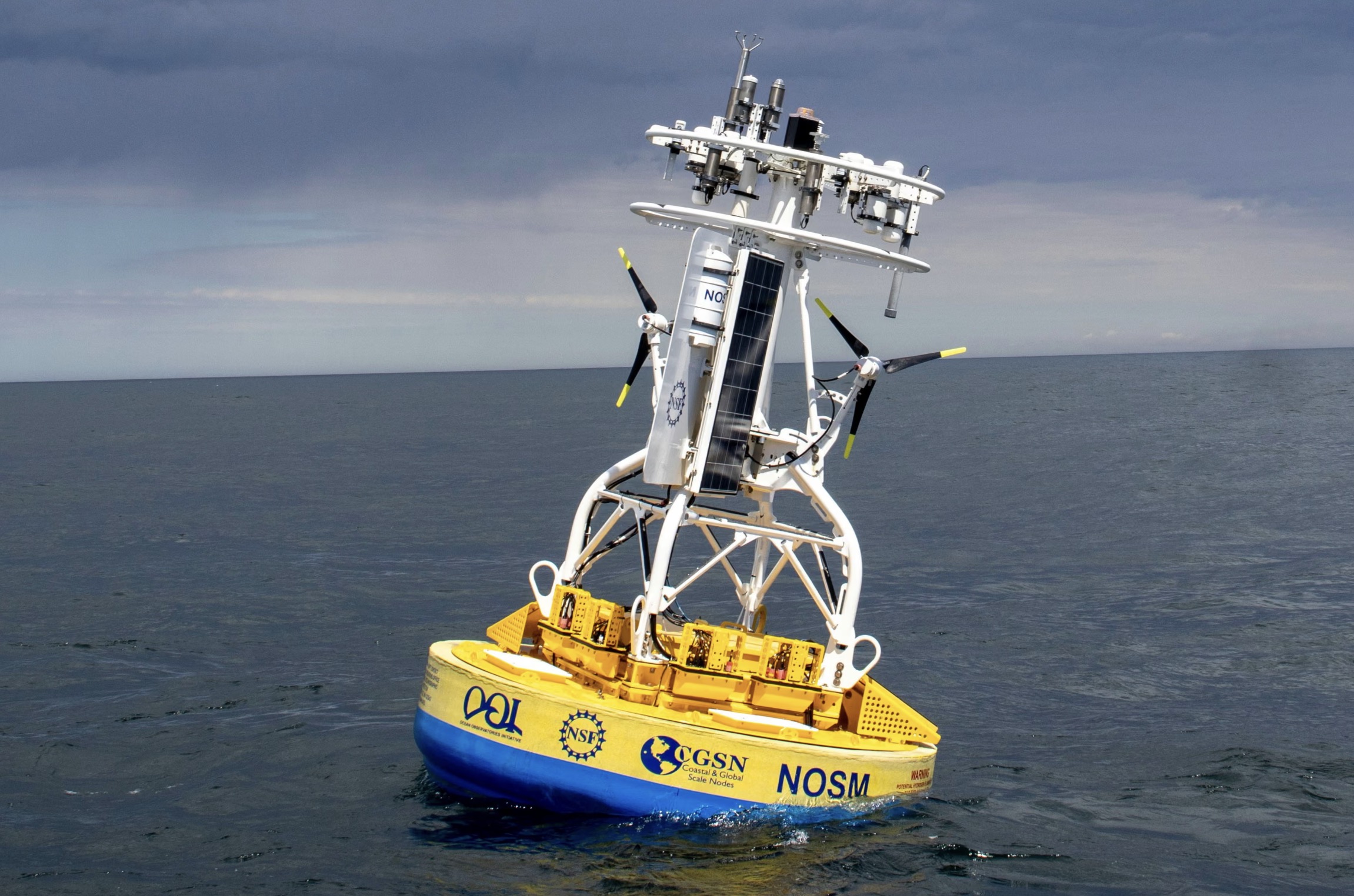
Washington has a bad habit of discovering the value of scientific instruments only after it orders them taken apart. This month, that habit nearly created a permanent blind spot beneath the waves.
On May 21, the National Science Foundation began dismantling most of the Ocean Observatories Initiative, a network of deep-sea instruments operating in the Atlantic and Pacific oceans. The agency planned to remove all in-water infrastructure from four arrays near Greenland, Alaska, the Pacific Northwest and North Carolina, leaving only the Regional Cabled Array off Oregon in operation.
Then, on June 18, NSF reversed itself. It promised to stop removing equipment, continue maintenance and convene an expert panel to evaluate the system’s future. But the reversal came too late to prevent the recovery of the entire Endurance Array off Oregon and Washington. NSF now says those instruments will be serviced and redeployed.
That reprieve is good news. It is not evidence that the system worked.
The Ocean Observatories Initiative is not a catchall name for every American weather buoy or ocean sensor. It is an NSF research facility designed to make continuous, multidisciplinary measurements from the seafloor to the atmosphere. Its more than 900 instruments monitor temperature, salinity, currents, acidity, dissolved oxygen, carbon dioxide, marine ecosystems, earthquakes and submarine volcanic activity. Much of the information reaches scientists—and the public—in real time.
Those details matter because the proposal was sometimes described as though it would immediately eliminate daily weather forecasting or all American tsunami monitoring. It would not.