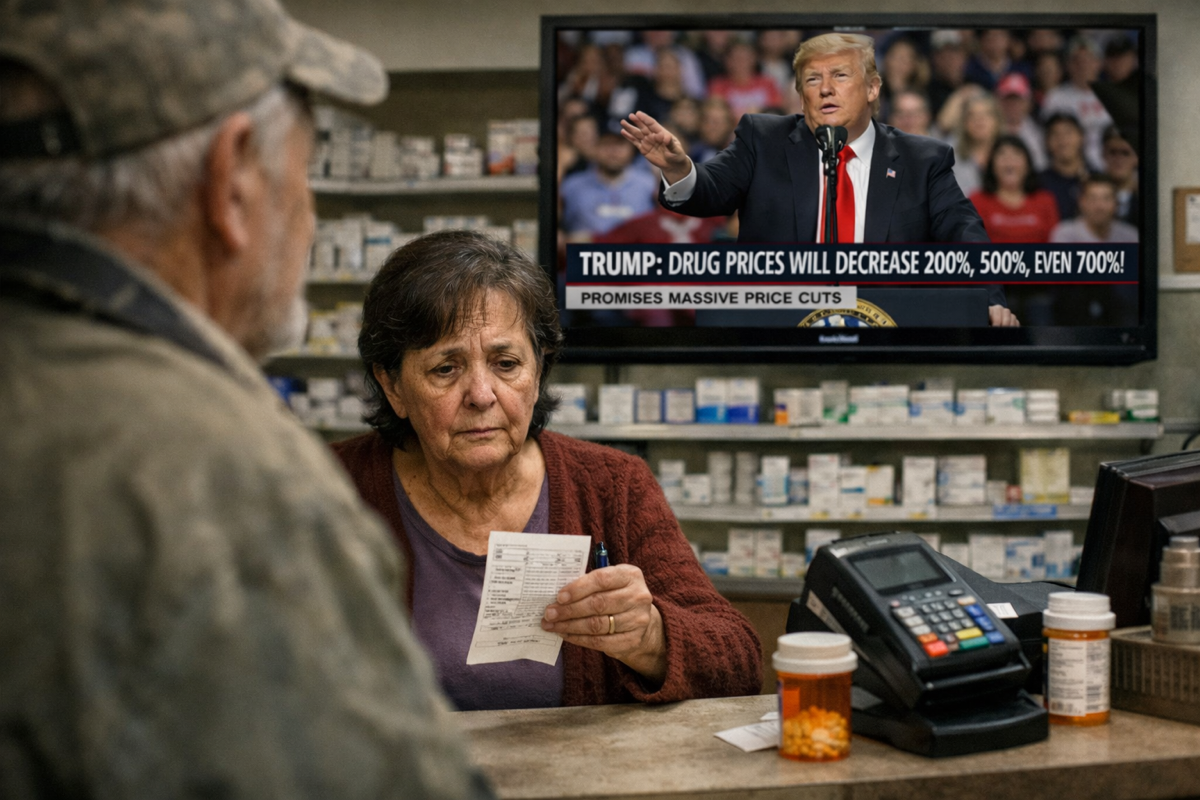
Trump Math creates new kinds of imaginary numbers.
The first time Maria Alvarez heard that drug prices had dropped seven hundred percent, she laughed—then stopped laughing.¹
She was standing at the counter of her independent pharmacy in Lawrence, Massachusetts, sorting a stack of prior authorizations. A local TV clip was playing on her phone. Trump was at a podium, confident, expansive, saying the cuts were “tremendous—two hundred percent, three hundred, five hundred, seven hundred percent.”¹ He said it the way people say free parking.
Maria has been filling prescriptions for twenty-two years. She knows what a discount looks like. She knows what a rebate looks like. She knows what a shortage looks like. A 700 percent reduction is not a thing that exists in her world—or any world where numbers mean something.
“I thought maybe I was missing something,” she told me later. “Then I realized—no, he just doesn’t know what the words mean.”
Two days earlier, a patient with Type 2 diabetes had asked her if the new cuts meant his medication would finally be affordable. He’d watched the same clip. He was hopeful in the way people are hopeful when they’re tired.
Maria didn’t know how to answer him without sounding like a liar herself.
She knew the price hadn’t gone down. She knew her wholesaler had warned her about potential disruptions if pharmaceutical tariffs moved forward.² She knew the margins on generics were already thin enough to split. But what she didn’t know—what no one at that counter could explain—was how a president could say something so mathematically impossible and expect the country to treat it like policy.