Hawaii just asked the forbidden question.
A corporation can own property, sign contracts, sue, borrow, merge, outlive its founders, and shield its owners from personal liability because the state allows it to. But does that state-created creature also get to spend corporate money to shape the elections that govern the state?
In May 2026, Hawaii said no.
The law may die in court. But its question will not. For fifteen years, American campaign-finance law has mostly asked whether corporations have a right to speak. Hawaii moved the question back one step: who gave them the voice?
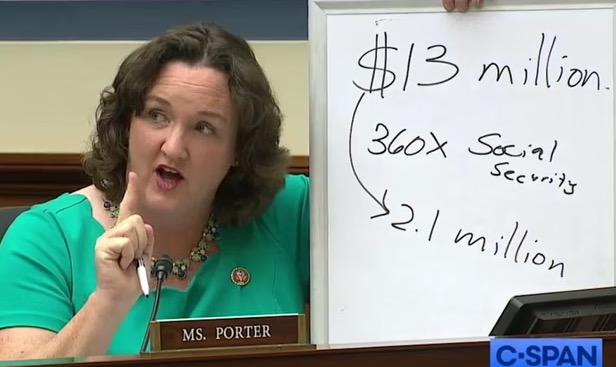
To see why that matters, start with a whiteboard.
Katie Porter built her political identity around one. In congressional hearings, she wrote numbers where everyone could see them: drug-company profits, bank fees, CEO pay, the cost of a family’s bills. The method was plain: here is the claim, here is the math, here is what power would rather keep blurry.
Then, in 2024, Porter ran for the United States Senate in California, and another kind of math arrived. Fairshake, a super PAC backed by cryptocurrency executives and investors, spent about $10 million on ads opposing her. The ads did not have to explain crypto regulation or Porter’s criticism of the industry. They only had to make her smaller, less trustworthy, less electable. The money came from a sector with business before Congress. The message arrived as politics.¹
Porter lost, though elections are never clean enough to credit one super PAC with one defeat.