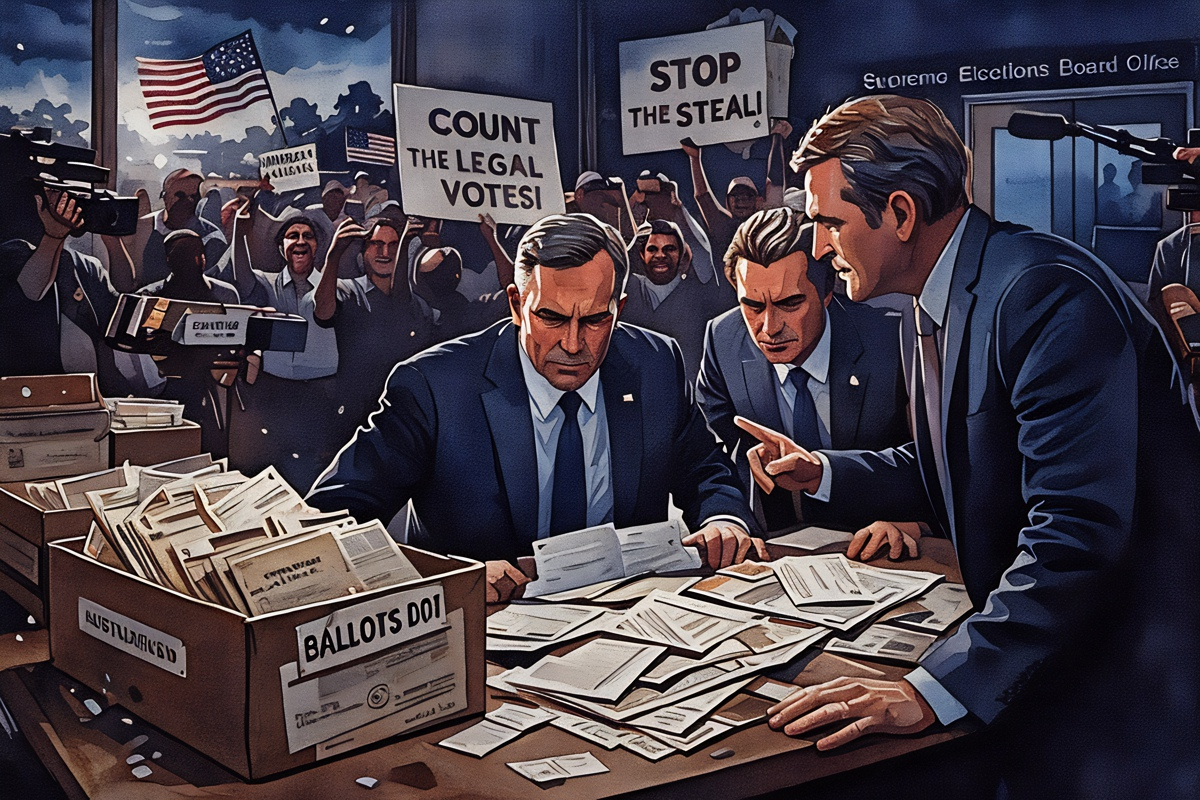
The Supreme Court did not change how Americans vote when it decided Bost v. Illinois State Board of Elections. No ballots appeared or vanished. No machines were adjusted. No deadlines quietly slid.
What it changed was something subtler—and more destabilizing: who gets to keep an election from ever quite ending.
On January 14, the Court ruled that any candidate for federal office can challenge the rules used to count votes in their election, even if they cannot show that those rules affected the outcome.¹ The harm, the Court said, is not necessarily losing. It can be something looser and more subjective: damage to the election’s legitimacy.²
That sounds abstract until you look at how elections actually play out now.
For most of modern American history, elections concluded. There were winners, losers, and usually a brief spell of protest before the country moved on. Courts intervened when something clearly broke. One quiet reason this worked was a basic rule: to sue, you had to show that what you were challenging had harmed you in a real, concrete way.
If a candidate lost by a mile, judges had little interest in arguments about envelope markings or counting routines. The election ended. The system advanced.
Bost loosens that rule.
Under the new standard, a candidate no longer needs to show that a voting rule flipped a race—or even that it plausibly could have. It is enough to say the rule governed their election and that it weakened public confidence.