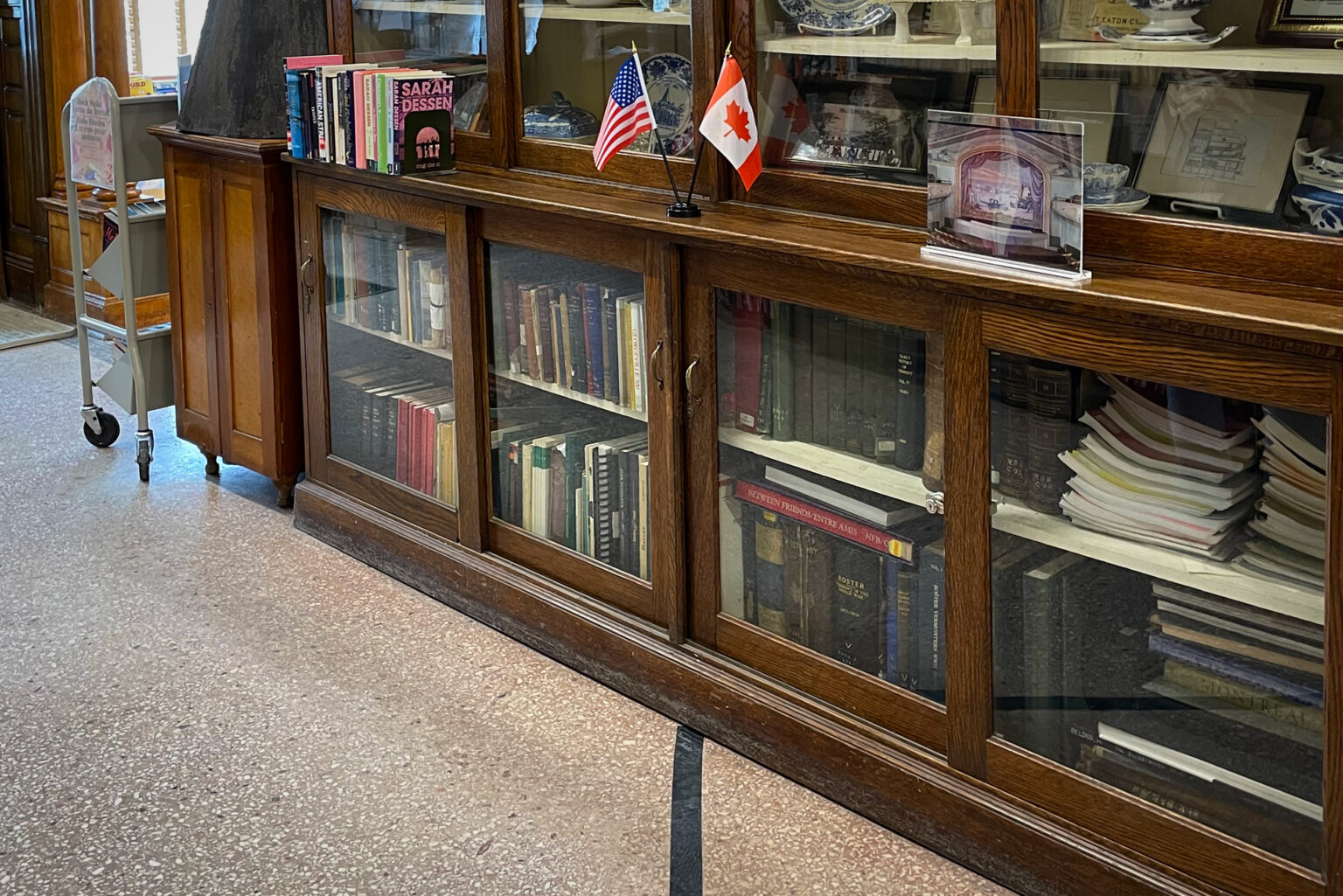
The Haskell Free Library and Opera House sits on the line between Derby Line, Vermont, and Stanstead, Quebec. For more than a century, that placement carried the meaning of the institution. The building did not erase the border. It made the border human. Americans and Canadians could enter the same library, sit in the same reading room, attend the same performances, and live, for a while, inside one of the rare places where the line between countries remained visible without becoming decisive.
That exception is now being rebuilt as procedure.
The new Canadian entrance is open. What had been a storage area and emergency exit has been converted into an official doorway for Canadian visitors. The formal inauguration is scheduled for June 10. The ribbon will be cut as a celebration of restored access. It will also mark something harder to name: the moment a shared front door became two national doors.¹
The Haskell still describes itself as serving the cultural needs of the community on both sides of the Canada-U.S. border, in English and French. That is the civic purpose of the building. The library and opera house were placed across the line so people on either side could use one institution.²
The new rules describe a different country.
The sidewalk connecting Canada and the United States beside the library is now permanently closed, except for a limited mobility exemption. Canadians are directed to use the Canadian entrance. Americans use the American entrance. Visitors must leave through the same door they entered. Family or friend reunions and cross-border visits are prohibited.³
That last sentence carries the story.