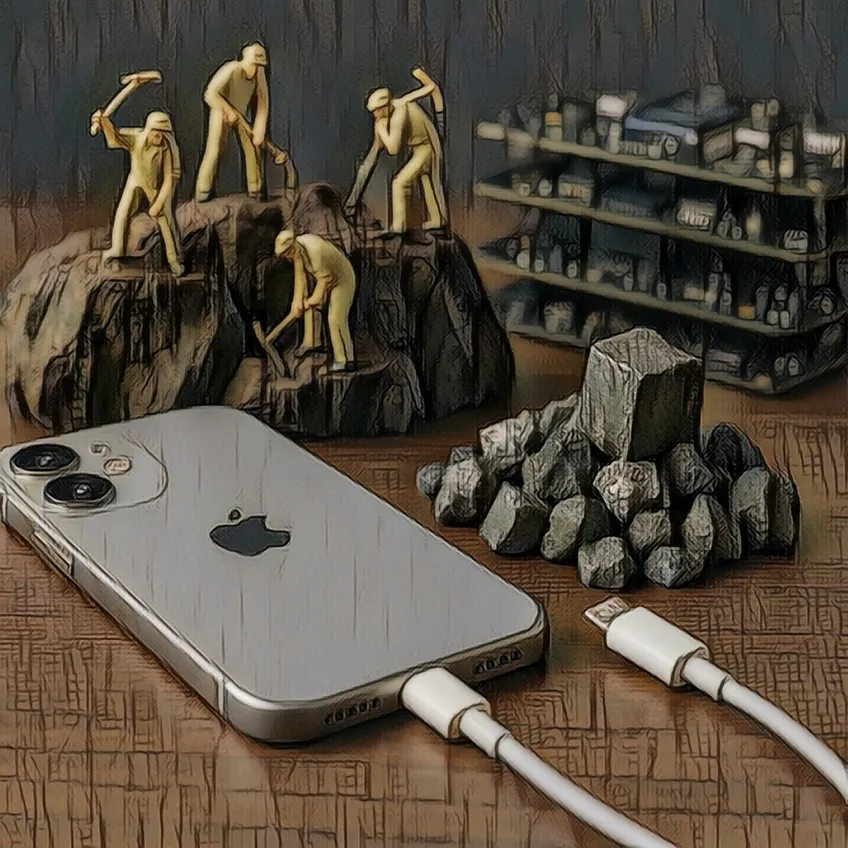
How 17 obscure metals became the quiet chokehold of the modern world
The problem with the future is that it runs on metals no one talks about, or can pronounce.
Seventeen of them, to be exact—neodymium, terbium, dysprosium, and their tongue-twisting cousins. You’ve probably never heard of them. But they’re in your phone screen, your electric car motor, your wind turbine, your MRI scan—and your missile defense system.
These are rare earth elements. Not rare like diamonds. Rare like trust: scattered, hard to separate, and too often controlled by someone else.
“If China stops exporting rare earths,” said NioCorp CEO Mark Smith, “the effect on U.S. military readiness would be immediate.”
That’s not an exaggeration. Right now, over 80% of the world’s rare earths are processed in China. The U.S. still sends its raw ore there from a single mine in California. We dig it up, they finish the job. It’s like catching your own fish and mailing it to Beijing for cooking.
It wasn’t always this way. In 2010, China briefly cut off rare earth exports to Japan over a diplomatic dispute. Prices exploded. Panic followed. Then, predictably, the world moved on. Until now.
The green economy—EVs, solar panels, grid storage—runs on rare earth magnets. So does the Pentagon. And China knows it.
Jordy Lee at the Payne Institute put it bluntly:
“China’s already set up to win.”
The problem isn’t geology. Cerium is more common than copper. The problem is extraction. Rare earths aren’t found in neat veins. They’re tangled in other rocks, like static in a podcast. You can pull them out, sure—but you’ll need acids, toxic waste ponds, and, occasionally, a bit of radiation.